55
Paróistí
3,057
Bailte Fearainn
352,634
Taifid Daonáirimh
69,700
Teaghlaigh
2
Bliana Daonáirimh
- Daoine
- 178,773
- Teaghlaigh
- 35,149
- Daoine
- 173,861 -2.7%
- Teaghlaigh
- 34,551 -1.7%
Maidir Liom
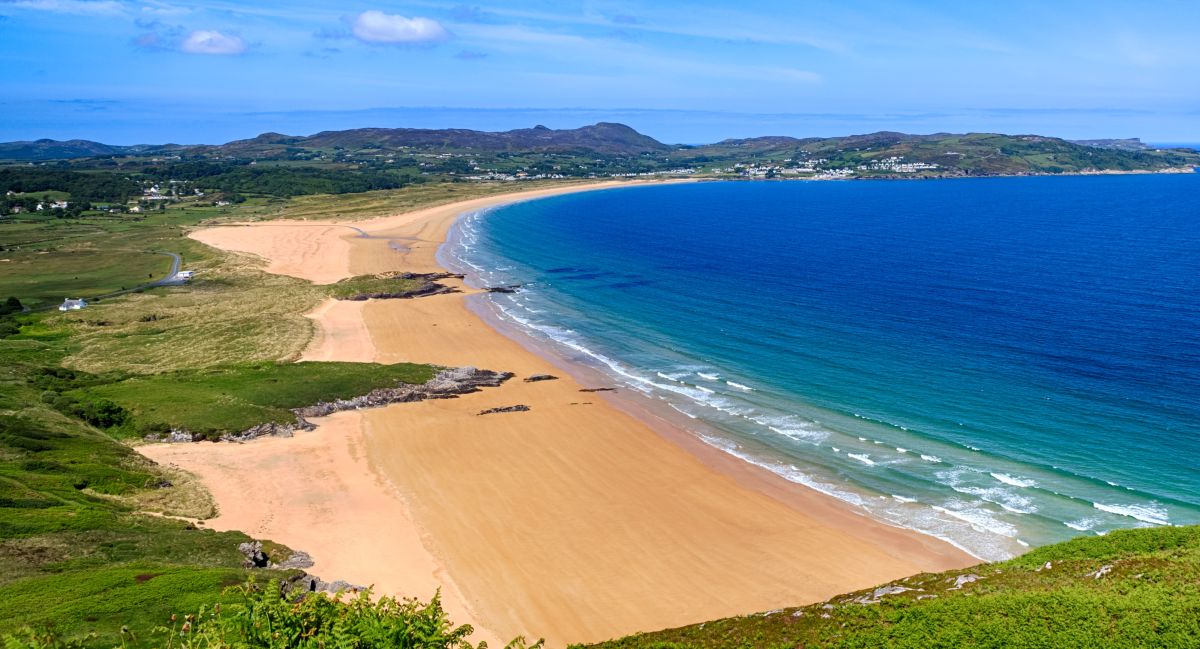
Donegal is located in the northwest of the island of Ireland, positioned in the province of Ulster. The county is bordered by the Atlantic Ocean to the west and north, giving it an extensive and dramatic coastline characterized by rugged cliffs, sandy beaches, and numerous headlands. The landscape is predominantly mountainous and moorland, with the Derryveagh Mountains and Bluestacks forming significant highland regions. Much of the terrain is wild and sparsely populated, particularly in the interior, while settlements tend to cluster along the coast and river valleys. The county's geography has historically made it somewhat isolated from the rest of Ireland, contributing to its distinct cultural identity.
The history of Donegal spans thousands of years, from prehistoric settlements to the medieval period when it was the stronghold of the O'Donnell clan, one of Ireland's most powerful Gaelic families. During the Tudor and Stuart periods, the county experienced significant upheaval, including the Flight of the Earls in 1607 when many Irish nobles, including the O'Donnells, left Ireland for continental Europe. Donegal subsequently came under English control and experienced periods of plantation and settlement. Later, like much of Ireland, it was affected by the Great Famine of the 1840s and subsequent emigration waves that shaped its demographic history.
Donegal is known for its strong Irish cultural heritage, including the Irish language, which remains more widely spoken here than in many other parts of Ireland. The county has a reputation for traditional music, crafts, and textiles, particularly Donegal tweed, a distinctive woven fabric that has been produced in the region for generations. The dramatic landscape has attracted artists, writers, and visitors, and Donegal's natural beauty, including sites like Slieve League and Glenveagh National Park, continues to draw tourism. These cultural and natural assets remain central to the county's identity and economy today.
Source: AI generated

Photo by K. Mitch Hodge on Unsplash
-
Dlínse
Poblacht na hÉireann
-
Ainm Gaeilge
Dún na nGall
-
Bliana Daonáirimh
1901, 1911
-
Ceantair
178 ceantar daonáirimh
- Logainm
Annals of the Four Masters
Historical references from O'Donovan's edition (1848–51)
36 places in this county are recorded in the Annals of the Four Masters.
*Iveagh*
The Annals of the Four Masters record Veagh (Irish: Uí-Eathach-Cobha) in 75 entries between AD 545 and AD 3549.
Inishowen
The Annals of the Four Masters record Inishowen (Irish: Inis-Eoghain) in 38 entries between AD 465 and AD 1601.
*Drumcliff*
The Annals of the Four Masters record Drumcliff (Irish: Druim-chliabh) in 12 entries between AD 871 and AD 1355.
Kilkenny
The Annals of the Four Masters record Kilkenny (Irish: Cill-Chaimnigh) in 10 entries between AD 1085 and AD 1601.
Mullingar
The Annals of the Four Masters record Mullingar (Irish: Muileann-chearr) in 9 entries between AD 1306 and AD 1598.
Source: Annals of the Kingdom of Ireland by the Four Masters, ed. John O'Donovan (1848–51). Public domain.
Luacháil Griffith
Cartlann Náisiúnta na hÉireann (timpeall 1830idí-1850idí)
Taifeadadh 7,593 sealbhóir i Luacháil Griffith ar fud 901 baile fearainn (1830idí-1850idí).
Príomhshloinnte
Foinse: Leabhair Oifig na Luachála, Cartlann Náisiúnta na hÉireann. Taifid phoiblí.
Gníomhartha Tapa
Faigh an Aip iOS
Cuardaigh ar an mbóthar
Teorainn an Áit
OpenStreetMapSonraí
- Béarla
- Donegal
- Gaeilge
- Dún na nGall
- Dlínse
- Poblacht na hÉireann