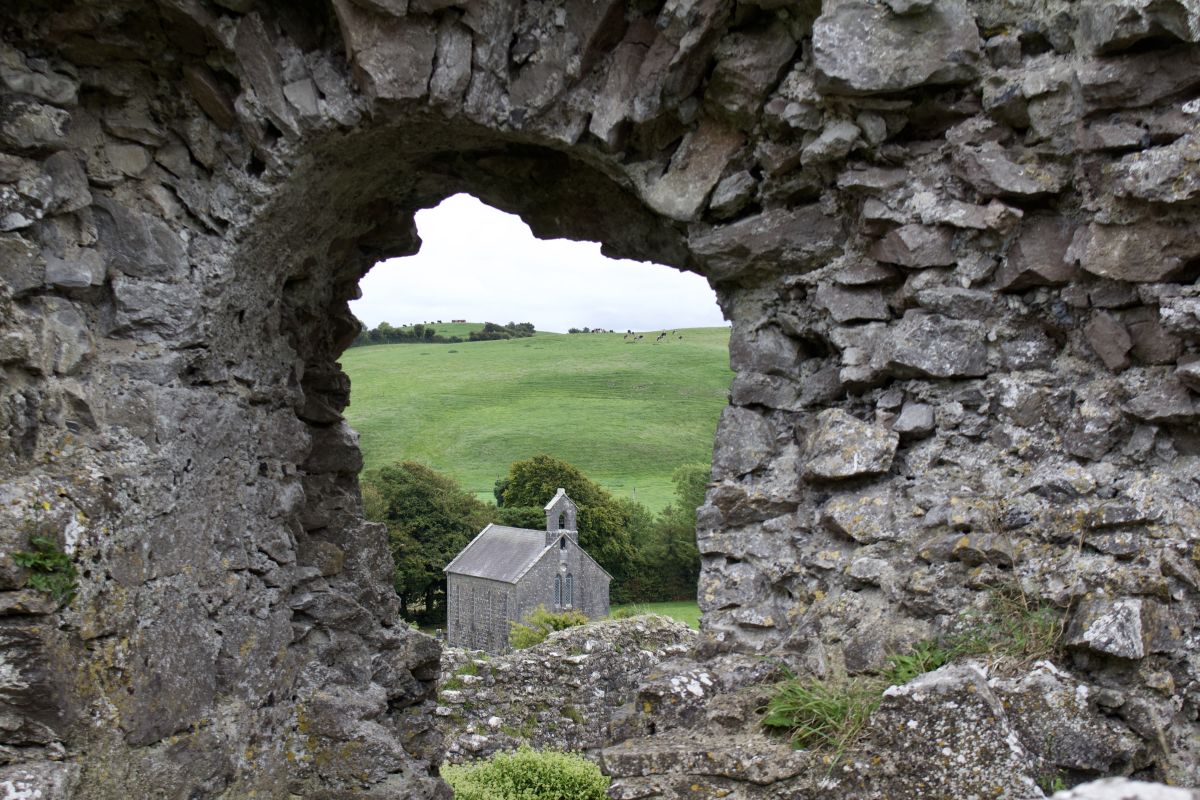
Maidir Liom
Dogstown is a small parish located in County Tipperary in the province of Munster in the Republic of Ireland. The parish sits within the rolling countryside that characterizes much of this region, which is known for its pastoral landscape and agricultural heritage. The area is situated in the southern part of the county, part of the broader landscape that defines rural Tipperary with its fields, farmland, and traditional Irish village settlements. Like many parishes in this region, Dogstown reflects the typical topography of Munster, with gentle hills and green fields that have long supported farming communities.
The parish, like many in Ireland, has roots extending back centuries through the parish system that developed under the influence of the Catholic Church. Dogstown represents one of the many small administrative and religious divisions that organized Irish rural life, particularly following the Reformation and the consolidation of Catholic parishes in Ireland. The naming and boundaries of such parishes often reflect historical patterns of settlement and land organization that evolved over medieval and early modern periods, though detailed historical records specific to Dogstown itself may be limited in widely available sources.
As a parish community, Dogstown would have served as a focus for local religious life, with the parish church forming a central point for the community. Like rural parishes throughout Ireland, it would have been fundamental to social organization, providing not only spiritual leadership but also serving as a gathering point for community life and events. The parish structure remains significant in Irish rural areas today, even as modern administrative divisions have evolved alongside traditional ones.
Dogstown reflects the broader character of rural Tipperary parishes—small, agricultural communities with deep roots in Irish Catholic and farming traditions. While it may not be widely known beyond the local region, it represents the countless small parishes that form the fabric of rural Irish life and continue to serve as important focal points for their communities, maintaining cultural and religious traditions that have persisted for generations.
Source: AI generated
No photo added yet
- Áit
-
Barúntacht
An Trian Meánach
-
Ainm Gaeilge
Baile na Madraí
-
Bailte Fearainn
1 baile fearainn
- Logainm
Luacháil Griffith
Cartlann Náisiúnta na hÉireann (timpeall 1830idí-1850idí)
Taifeadadh 40 sealbhóir i Luacháil Griffith ar fud 2 baile fearainn (1830idí-1850idí).
Príomhshloinnte
Foinse: Leabhair Oifig na Luachála, Cartlann Náisiúnta na hÉireann. Taifid phoiblí.
Gníomhartha Tapa
Faigh an Aip iOS
Cuardaigh ar an mbóthar
Suíomh an Pharóiste
Sonraí
- Béarla
- Dogstown
- Gaeilge
- Baile na Madraí
- Barúntacht
- An Trian Meánach
- Áit
- Tiobraid Árann