
About
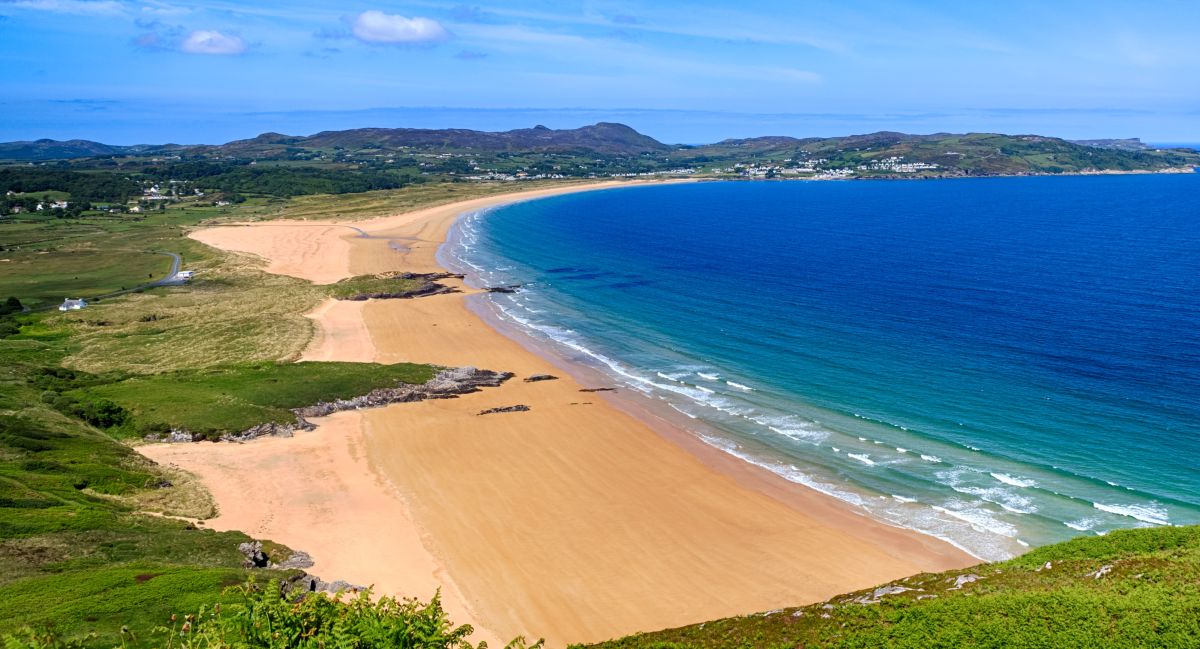
Dromore is a small townland located in County Donegal in the northwest of Ireland, situated in the region known for its rugged Atlantic coastline and mountainous terrain. The townland lies within the broader landscape of the Donegal Peninsula, an area characterized by dramatic cliff formations, moorland, and coastal vistas. The geography of this part of County Donegal is marked by challenging terrain with peat bogs, rolling hills, and proximity to the sea, which has historically shaped both the settlement patterns and the livelihoods of those who have inhabited the area. Like many Donegal townlands, Dromore is small in population and reflects the dispersed rural settlement pattern typical of northwest Ireland.
The area has deep historical roots extending back centuries. County Donegal itself has a rich history tied to the Gaelic clans, early Christian settlements, and later interactions with English colonial expansion. Many townlands in this region contain archaeological remains and historical sites reflecting layers of habitation from prehistoric times through the medieval period. Dromore, like other Donegal townlands, would have experienced the various historical upheavals that affected the broader region, including the effects of the Great Famine in the mid-nineteenth century and subsequent emigration waves that significantly reduced rural populations.
The townland remains part of the living cultural and community fabric of County Donegal, even as rural depopulation has affected many such areas. Dromore is situated within a region known for its strong Irish language heritage and traditional culture. The Donegal area has maintained Gaeilge (Irish) as a community language in certain districts, and cultural traditions including music, storytelling, and craft have remained important to local identity. For residents and descendants with family connections to the townland, Dromore represents part of their ancestral heritage and connection to the Irish landscape.
Today, Dromore exemplifies the contemporary challenges and character of rural Irish townlands. Like many small rural communities in northwest Ireland, it faces the ongoing pressures of emigration and economic change, yet it retains significance as part of the agricultural and cultural heritage of Donegal. The townland connects people to the land, history, and community networks that have sustained Irish rural life for generations, serving as an important marker of local and family identity within the broader tapestry of County Donegal.
Source: AI generated
No photo added yet
- Parish
- County
-
Barony
Kilmacrenan
- Logainm
Valuation Office Records
From the National Archives of Ireland (c. 1830s–1850s)
2 occupiers recorded in the Valuation Office Books for this townland.
Source: Valuation Office Books, National Archives of Ireland. Public records.
No comments yet. Be the first to share your research!