70
Paróistí
1,581
Bailte Fearainn
130,426
Taifid Daonáirimh
25,832
Teaghlaigh
2
Bliana Daonáirimh
- Daoine
- 63,085
- Teaghlaigh
- 12,997
- Daoine
- 67,341 +6.7%
- Teaghlaigh
- 12,835 -1.2%
Maidir Liom
WESTMEATH (County of), an inland county of the province of LEINSTER, bounded on the east by the county of Meath; on the north, by those of Meath, Cavan, and Longford; on the west, by those of Longford and Roscommon; and on the south, by the King's county. It extends from 53° 18' to 53° 47' (N. Lat.), and from 6° 55' to 7° 55' (W. Lon.); comprising an area, according to the Ordnance survey, of 386,251 statute acres, of which 313,935 are cultivated land, 55,982 are unimproved mountain and bog, and 16,334 are under water. The population, in 1821, amounted to 128,819; and in 1831, to 136,872.
This county formed part of the kingdom of Meath when the island was divided into five provincial dynasties, and was then known by the name of Eircamhoin, or "the Western Division." Its provincial assemblies were held at the hill of Usneagh, supposed by some to be the Laberus noticed by Ptolemy as one of the inland cities of Ireland.
In 1153, the northern part of the county became the scene of contention between two sons of Dermod O'Brien, who terminated their strife by a bloody battle fought near Fore, in which Turlogh having obtained the victory, became master of his brother's person and put out his eyes. The principal Irish families during this period were those of Mac Geoghegan (chieftains of Moycashel), O'Mulbrenan or Brenan, O'Coffy, O'Mullady, O'Malone, O'Daly, O'Higgins, Magawly, Magan, O'Shannagh (afterwards changed to Fox), O'Finilan and O'Cuishin. The annals of the religious houses prove that this county suffered much during the period in which the island was exposed to the predatory incursions of the Danes; the town and abbey of Fore alone having been burnt nine times in the 10th and 11th centuries, either by the Danes or by the bordering Irish chieftains.
After the settlement of the English in Leinster, the county formed part of the palatinate of Hugh de Lacy, who allotted it in large tracts to his principal followers, the most remarkable of whom were Petit, Tuite, Hussey, D'Alton, Delamare, Dillon, Nugent, Hope, Ware, Nangle, Ledewich, Geneville, Dardis, Gaynor, and Constantine. Subsequently, the families of Darcy, Johnes, Tyrrell, Fitzgerald, Owen, and Piers settled here at various periods previous to the Reformation. The ancient Irish were not at once exterminated by the new settlers: they made several attempts to recover their former position, in one of which, in 1329, Mac Geoghegan, chieftain of Moycashel, defeated an English force under Lord Thomas le Botiller, who was killed in the action. Two years after the Irish were defeated in a battle near Finae by Sir Anthony Lucy, Lord Justice. Mortimer, Earl of March, who married Philippa, daughter and heiress of Lionel, Duke of Clarence, third son of Edward III., finding it necessary to conceal himself during the troubles that followed the deposition of Richard II., chose this county as his place of refuge, where he remained a long time in concealment.
In 1468, Delamar, abbot of Tristernagh, was attainted by act of parliament for uniting with the Irish enemies and English rebels in an insurrection in which the town of Delvin was burnt. By an act of the 34th of Henry VIII., the ancient palatinate of Meath was divided, the eastern portion retaining its former name and the western being distinguished by the appellation which it still retains. Longford was a portion of the latter division, until it was formed into a distinct county by Elizabeth.
The plan for the insurrection of 1641 is said to have been concerted in the abbey of Multifarnham, in this county, as being conveniently situated in the centre of the island and a place of great resort for religious purposes, so that the assemblage of large numbers there at any particular time was less liable to suspicion: and in the subsequent war between William and James the county was the scene of several severe actions. So great was the change of property occasioned by the confiscations after these wars, that not one of the names of the persons who formed the previous Grand Juries are found on the modern lists.
The principal families who obtained grants of confiscated lands were those of Packenham, Wood, Cooke, Stoyte, Reynell, Winter, Levinge, Wilson, Judge, Rochfort, Handcock, Bonynge, Gay, Handy, Ogle, Middleton, Swift, Burtle, and St. George. Those of Smith, Fetherston, Chapman, O'Reilly, Purdon, Nagle, Blaquiere, and North obtained property by purchase or inheritance. Among the recent settlers, the family of Nagle alone claims from an ancient proprietor, having inherited in the female line from the Mac Geoghegans. On the landing of the French at Kilcummin a rising took place in this county, in consequence of an erroneous report from the north: the peasantry first assembled at the hill of Skea, whence they proceeded to Lord Sunderlin's park, but retired without committing any act of hostility. Afterwards they attacked and plundered Wilson's Hospital, where there was a collection of arms, and having converted it into a barrack, kept possession of it until driven out by a detachment of the royal forces.
County Westmeath | Westmeath Towns and Baronies | Westmeath Topography | Westmeath Agriculture | Westmeath Geology | Westmeath Manufacturing | Westmeath Rivers | Westmeath Antiquities | Westmeath Society
Source: Lewis's Topographical Dictionary of Ireland (1837)
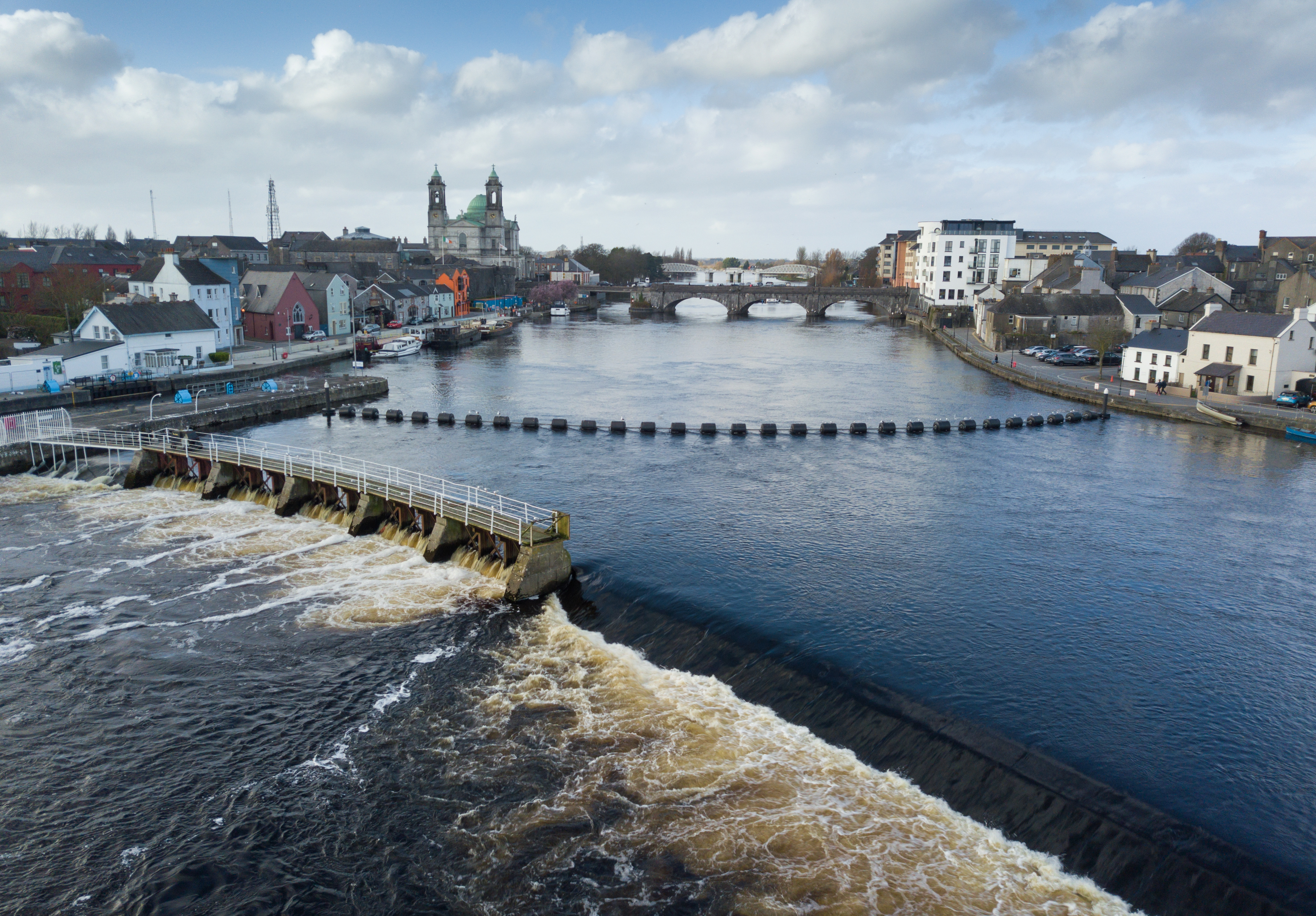
Photo by County hero image on Unsplash
-
Dlínse
Poblacht na hÉireann
-
Ainm Gaeilge
An Iarmhí
-
Bliana Daonáirimh
1901, 1911
-
Ceantair
121 ceantar daonáirimh
- Logainm
Annals of the Four Masters
Historical references from O'Donovan's edition (1848–51)
The Annals of the Four Masters record Westmeath (Irish: Westmeath) in 4 entries between AD 771 and AD 1382.
Early Christian
Viking & Pre-Norman
Medieval
Ecclesiastical & Political Records
- • Westmeath, abbot of, 771.
- • Westmeath, bishop and abbot of, 783.
Source: Annals of the Kingdom of Ireland by the Four Masters, ed. John O'Donovan (1848–51). Public domain.
Luacháil Griffith
Cartlann Náisiúnta na hÉireann (timpeall 1830idí-1850idí)
Taifeadadh 6,993 sealbhóir i Luacháil Griffith ar fud 697 baile fearainn (1830idí-1850idí).
Príomhshloinnte
Foinse: Leabhair Oifig na Luachála, Cartlann Náisiúnta na hÉireann. Taifid phoiblí.
Gníomhartha Tapa
Faigh an Aip iOS
Cuardaigh ar an mbóthar
Teorainn an Áit
OpenStreetMapSonraí
- Béarla
- Westmeath
- Gaeilge
- An Iarmhí
- Dlínse
- Poblacht na hÉireann