94
Paróistí
1,832
Bailte Fearainn
185,021
Taifid Daonáirimh
34,907
Teaghlaigh
2
Bliana Daonáirimh
- Daoine
- 91,783
- Teaghlaigh
- 17,949
- Daoine
- 93,238 +1.6%
- Teaghlaigh
- 16,958 -5.5%
Maidir Liom
WATERFORD (County of), a maritime county of the province of MUNSTER, bounded on the west by that of Cork; on the north, by those of Tipperary and Kilkenny; on the east, by that of Wexford; and on the south, by St. George's Channel. It extends from 51° 54' to 52° 19' (N. Lat.) ; and from 6° 57' to 8° 8' (W. Lon.) ; comprising an extent, according to the Ordnance survey, of 461,598 statute acres, of which 343,564 acres are cultivated land, and 118,034 are unimproved mountain and bog. The population, in 1821, exclusively of the city of Waterford, which forms a county of itself, was 127,842; and, in 1831, 148,233.
The earliest inhabitants of this portion of the island were a tribe designated by Ptolemy Menapii, who occupied also the present county of Wexford. Prior to the seventh century, mention is made of two small tracts, one called Coscradia, and the other Hy-Lyathain, on the south, about Ardmore; but these designations appear to have merged at an early period in that of Decies, given by the preponderating power of a tribe called the Desii, or Decii, who occupied the central and larger portions of the county at the time of the English invasion. They are said to have been originally planted in Meath, and gave name to the barony of Deece.
In a contest for the chieftaincy of that tribe in the middle of the third century, a large number was compelled to abandon that territory, and to remove southwards, and they ultimately settled themselves in the tract of country extending from Carrick-on-Suir to Dungarvan, and thence eastward to Waterford harbour. From this time Decie in Meath, and Decie in Munster, were called respectively North and South Decie; the latter also bore the Irish name of Nan-Decie. But Aengus Mac Nafrach, King of Munster, in the fifth century, enlarged the territories of the Decii by annexing to them the lands of Magh-Femin, comprising the present barony of Middlethird, and the large extended plains near Cashel, called Gowlin, together with the country about Clonmel: and from this period the designation of Decie-Thuasgeart, or North Decie, became applied only to this grant; the former territories in Waterford still retaining the distinctive appellation of Decie-Deis-geart, or South Decie.
St. Declan, a Christian missionary of the race of the Decii, converted great numbers of them about the year 402, and, by his influence, their pagan chieftain was deposed, and one of the Christian converts elected in his stead. This saint and St. Carthage, of the same sept, who died in 637, founded respectively the religious establishments at Ardmore and Lismore, the extent of the parishes attached to which is thus accounted for by their remote antiquity. In the ninth century, the population of this territory was augmented by the Danes, who, under a leader named Sitric, conquered and retained the maritime district bordering on the harbour of Waterford, then nearly insulated, and forming the present barony of Gaultier, "the land of the Gauls, or Foreigners."
They founded the city of Waterford, and made it their chief station; and though they never became amalgamated with the native population, they appear at a subsequent period to have united with them in cases of common danger. In the twelfth century, the chieftains of the Decii assumed the surname of O'Feolain; and in 1169, Melaghlin O'Feolain, Prince of the Decii, was taken prisoner at the siege of Waterford by the Anglo-Normans under Strongbow, and saved only through the mediation of Dermod Mac Murrough. He was the last chieftain who enjoyed the full powers of his predecessors; but the political existence of the Decii was not at once terminated, as appears from the recorded deaths of three of their "kings " in the interval between that period and the year 1206.
The power of the Anglo-Norman invaders was too great to be long effectually resisted. In 1173, Raymond le Gros, with a select party, overran the country of the Decies, which he everywhere depopulated and ravaged, and, after a conflict with the Danes of Cork, returned in triumph to Waterford. Henry II., in 1177, granted in custody to Robert le Poer, his marshal, the country lying between Waterford and the river of Lismore (the Blackwater), comprising the greater part of the present county, the rest of which was included in the grant of the "kingdom" of Cork to Milo de Cogan and his companions: henceforward the Poers maintained a great superiority in this territory, and often waged sanguinary hostilities on their own part with the men of Waterford.
It appears from a charter of King John to the citizens of Waterford, in 1206, that the territory of Waterford had been then erected into a county, the justices of assize and other officers of which were inhibited from exercising any authority within the city: this controverts the generally received opinion that the first counties in Ireland were erected by King John, in 1210. The same king granted the custody of this county and that of Desmond to Thomas Fitz-Anthony, together with all the royal demesnes in the same, at the annual rent of 250 marks; and by Edward I. it was confirmed to his son John, for 500 marks per ann.; but this act having been performed during the king's minority, the lands were subsequently recovered by the crown, by a decree against Thomas Fitz-Maurice, cousin and heir of John: Edward, however, in 1292, re-granted them to Thomas Fitz-Anthony, another branch of the Geraldines.
In 1300, a party of natives made an incursion into Waterford, but were repulsed with much slaughter by the O'Feolains. In 1444, James, Earl of Desmond, obtained a patent for the government of this and other counties of Munster; but three years afterwards, John Talbot, Earl of Shrewsbury, then lord-lieutenant of Ireland, obtained a grant from the king of the city and county of Waterford, and the dignity and title of Earl of Waterford, together with the castles, honour, lands, and barony of Dungarvan, with jura regalia, wreck, &c., from Youghal to Waterford, because the country was waste, in so far as, in lieu of producing any profit to the crown, it was a cause of great loss. This patent was made by virtue of a privy seal, and by authority of parliament; but by the act of the 28th of Henry VIII., vesting in the crown the possessions of all absentees from Ireland, the whole of the above lands, rights, and titles were resumed by the crown; and the only portion restored to the family of Talbot was the title, which was re-granted in 1661 by Charles II.
The county suffered the severest calamities during the protracted war in Munster, towards the close of Elizabeth's reign, those whom the sword spared being reduced to the extremest misery of famine. A large portion of its lands was forfeited: an extensive tract near its western confines, included in the grant to Sir Walter Raleigh, was subsequently vested by purchase in Sir Richard Boyle, afterwards Earl of Cork, and is now the property of the Duke of Devonshire.
In the war of 1641, it experienced its full share of the calamities of that period: the towns were chiefly in the Catholic interest, and their inhabitants ravaged the lands of the English settlers and put many of them to death: the Earl of Cork was scarcely able to defend his settlements in the west; and finally the whole was overrun and reduced by Cromwell's forces. Few events connected with the war of 1688 occurred here; but subsequently, in the middle of the last century, the county was much disturbed by agrarian associations and outrages committed by bands of the peasantry, styling themselves Whiteboys, Levellers, and Rightboys.
In the insurrection of 1798, the people of this county, notwithstanding the fury of the hostilities in the adjacent counties of Wexford and Kilkenny, suffered but little; the amount claimed for compensation of losses within its limits, during this period, being only £1322. 18. 11. Early in the present century, however, considerable disturbance was occasioned by the hostilities of the rural factions called "Caravats" and "Shanavests."
County Waterford | Waterford Towns and Baronies | Waterford Topography | Waterford Agriculture | Waterford Geology | Waterford Manufacturing | Waterford Rivers | Waterford Antiquities | Waterford City
Source: Lewis's Topographical Dictionary of Ireland (1837)

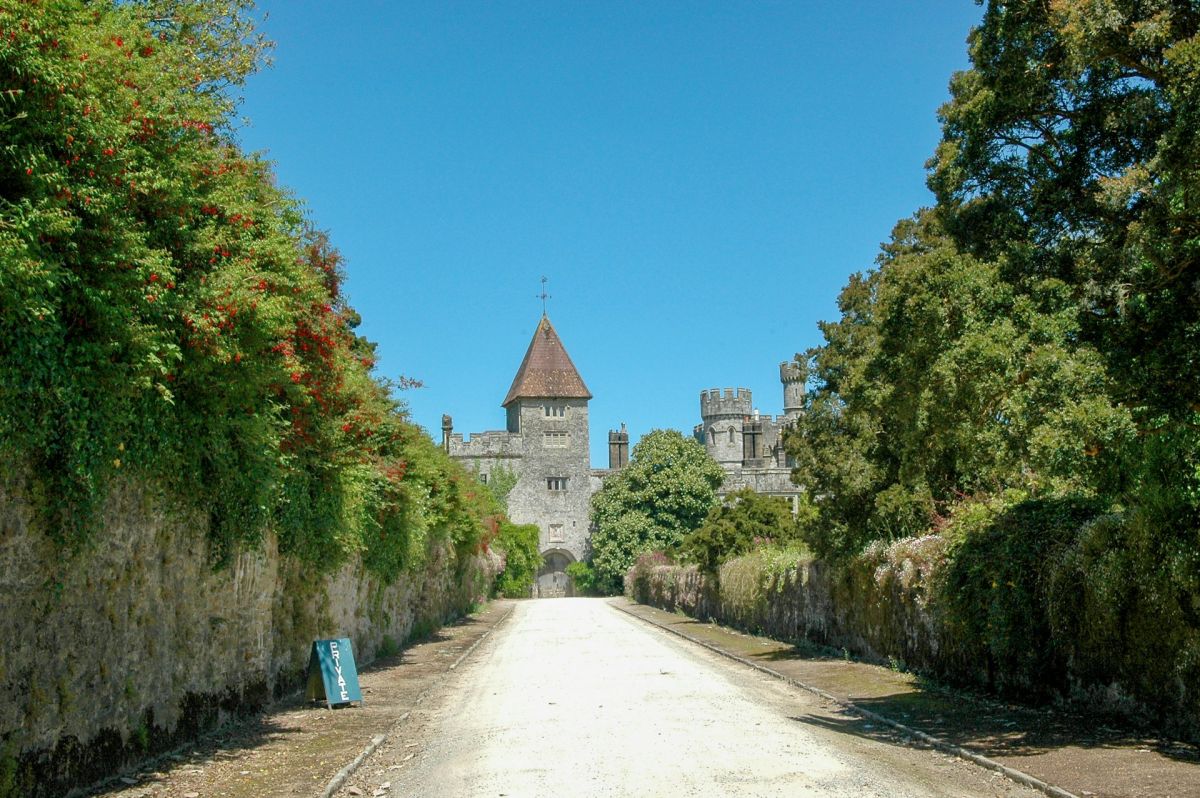
Photo by cristina paulet on Unsplash
-
Dlínse
Poblacht na hÉireann
-
Ainm Gaeilge
Port Láirge
-
Bliana Daonáirimh
1901, 1911
-
Ceantair
116 ceantar daonáirimh
- Logainm
Annals of the Four Masters
Historical references from O'Donovan's edition (1848–51)
9 places in this county are recorded in the Annals of the Four Masters.
*Glendalough*
The Annals of the Four Masters record Glendalough (Irish: Gleann-da-locha) in 64 entries between AD 617 and AD 1173.
*Kilronan*
The Annals of the Four Masters record Kilronan (Irish: Cill-Ronain) in 11 entries between AD 1339 and AD 1586.
The Annals of the Four Masters record Glendalough (Irish: Glendalough) in 9 entries between AD 910 and AD 921.
Kilcooney
The Annals of the Four Masters record Kilcooney (Irish: Cill-Cunna) in 1 entry in AD 732.
The Annals of the Four Masters record Garrarus (Irish: Garbhros) in 1 entry in AD 807.
Source: Annals of the Kingdom of Ireland by the Four Masters, ed. John O'Donovan (1848–51). Public domain.
Luacháil Griffith
Cartlann Náisiúnta na hÉireann (timpeall 1830idí-1850idí)
Taifeadadh 92,976 sealbhóir i Luacháil Griffith ar fud 1,448 baile fearainn (1830idí-1850idí).
Príomhshloinnte
Foinse: Leabhair Oifig na Luachála, Cartlann Náisiúnta na hÉireann. Taifid phoiblí.
Gníomhartha Tapa
Faigh an Aip iOS
Cuardaigh ar an mbóthar
Teorainn an Áit
OpenStreetMapSonraí
- Béarla
- Waterford
- Gaeilge
- Port Láirge
- Dlínse
- Poblacht na hÉireann