161
Paróistí
1,915
Bailte Fearainn
171,625
Taifid Daonáirimh
36,017
Teaghlaigh
3
Bliana Daonáirimh
- Daoine
- 32,950
- Teaghlaigh
- 5,857
- Daoine
- 71,843 +118%
- Teaghlaigh
- 15,195 +159.4%
- Daoine
- 66,832 -7%
- Teaghlaigh
- 14,965 -1.5%
Maidir Liom
MEATH, a maritime county of the province of LEINSTER, bounded on the east by Dublin and the Irish Sea; on the north by Louth, Monaghan, and Cavan; on the west by Westmeath; and on the south by the King's county, Kildare, and Dublin. It extends from 53° 23' to 53° 55' (N. Lat.), and from 6° 13' to 7° 19' (W. Lon.); and comprises an area, according to the Ordnance survey, of 567,127 statute acres, of which 561,527 are cultivated land, and 5600 unimproved mountain and bog. The population, in 1821, amounted to 159,183; and in 1831, to 176,826.
The Eblani, whose territory also extended over Dublin and Kildare, are mentioned by Ptolemy as being settled in this county. According to the native divisions it formed part of one of the five kingdoms into which Ireland was partitioned, and was known by the name of Mithe, Methe, Media or Midia, perhaps from its central situation. Other writers, however, derive its name from the Irish Maith or Magh, a "plain," or "level country," a derivation indicative of its natural character. It was afterwards divided into two parts, Oireamhoin, or "the eastern country," which comprehended the portion now known by the name of Meath; and Eireamhoin, or "the western country," comprehending the present counties of Westmeath and Longford, with parts of Cavan, Kildare, and the King's county.
The prince of East Meath was O'Nial, hereditary chieftain of Caelman or Clancolman, who is distinguished in the native annals by the name of the southern O'Nial. The district surrounding the hill of Taragh was originally called Magh-Breagh. On this hill, called also Teamor, from Teaghmor, "the great house," was held the general assembly of the states of the kingdom, which met triennially, from a very early period to the end of the sixth century. Here was preserved the Labheireg, or "stone of destiny," on which the monarchs of Ireland were placed at their inauguration, and which, after having been removed to Scotland, was carried away by Edward I., among the other trophies of his victory, to Westminster, where it still remains. From this hill, which St. Patrick chose as the most appropriate place for promulgating the object of his mission, the Christian religion spread itself rapidly over every part of the island. The numerous religious institutions founded by that apostle and his immediate disciples throughout the surrounding districts, attest the rapid progress and permanence of the new doctrine.
This part of Ireland suffered severely by the invasions of the Danes. In 838, Turgesius, king of that nation, sailed up the Boyne, and after making the country the scene of unexampled devastation, in which the persons and property of the Christian clergy were principal objects of persecution, he fixed here his seat of government. The erection of the numerous raths scattered over the county is attributed to him and his followers; one of them, of peculiar extent and strength, in the immediate neighbourhood of Taragh, is said to have been his chief place of residence. After his assassination by Melaghlin, king of Meath, the Danes who escaped a similar fate, after a continued struggle for more than a century, were totally defeated at Taragh in 980. Yet the frequent destruction of monasteries and towns recorded in the annals of the religious houses afford melancholy proof that, though unable to regain their former dominion, this ferocious and warlike people were powerful enough to disturb the tranquillity of the country by their frequent predatory incursions.
After the arrival of the English, Henry II. granted to Hugh de Lacy the whole of the ancient kingdom of Meath, to hold by the service of 50 knights. De Lacy shortly afterwards divided the greater portion of this princely grant among his principal followers, giving to Gilbert Nangle the territory of Morgallion; to Jocelyn, son of Gilbert, Navan, Ardbraccan, and their dependencies; to Adam Pheipo, the district and manor of Skreen; to Robert Misset, the lands of Lune; and to Gilbert Fitz-Thomas, Kells. From these grants, and from their first possessors having been created barons by the lord of the palatinate, who exercised the rights of sovereignty, the divisions were called baronies, which term ultimately became the general name for the great divisions of counties. The new occupants were not permitted to enjoy undisturbed the possessions thus acquired.
Roderic O'Conor, King of Ireland, at the head of a large army, suddenly entered Meath, and laid siege to Trim, which was saved by the rapid approach of Raymond le Gros, then celebrating his marriage with Strongbow's sister in Wexford. The county also suffered about the same time from the incursions of the Irish of Ulster, and from an invasion of Melaghlin, King of Meath, who took and demolished Slane Castle, after its governor, Richard Fleming, had been killed in its defence. On the death of Hugh de Lacy, who was assassinated at Dermagh or Durrow, in the King's county, by one of his own dependants, Meath descended to his son Walter. King John spent some time in this county during his abode in Ireland, and tradition says that he held a parliament at Trim, which is very doubtful, as there are no traces of its proceedings. A tomb in which one of this king's daughters is said to have been interred was shewn in the abbey of Newtown, near Trim.
About the year 1220, Meath was almost ruined by the private quarrels of Hugh, Earl of Ulster, and William Marshall. Walter de Lacy having died in 1234 without male issue, his princely possessions descended to his two daughters, the wives of Geoffrey de Geneville and Theobald Verdun. In the reign of Henry VIII., the extensive church property in the county fell into the hands of the king on the dissolution of the monasteries; and towards the close of the same reign Con O'Nial, King or Prince of Ulster, invaded Meath and pillaged and burned Navan in his progress; to prevent a recurrence of this calamity a cess of 3s, 4d. was laid on every ploughland in the county, to be applied towards enclosing Navan with a wall.
In the 34th year of the same king's reign, the division of the county into Meath and Westmeath took place. During the reign of Elizabeth the county was in a state of great wretchedness and destitution, as appears from the report made by Sir Henry Sidney, in 1576, in which he says "that, of the 224 parish churches then in the diocese, the walls of many had fallen; very few chancels were covered, and the windows and doors were spoiled. Fifty-two of these churches, which had vicars endowed, were better maintained and served than the others, yet but badly: 52 of the residue, which belonged to particular lords, though in a better state, were far from well." In the year 1798 a large body of insurgents, who had posted themselves on the hill of Taragh, were routed with considerable loss by a detachment of the King's troops and yeomanry.
County Meath | Meath Baronies and Towns | Meath Soil | Meath Agriculture | Meath Trees | Meath Geology | Meath Manufacturing | Meath Rivers | Meath Antiquities | Meath Society | Diocese of Meath
Source: Lewis's Topographical Dictionary of Ireland (1837)

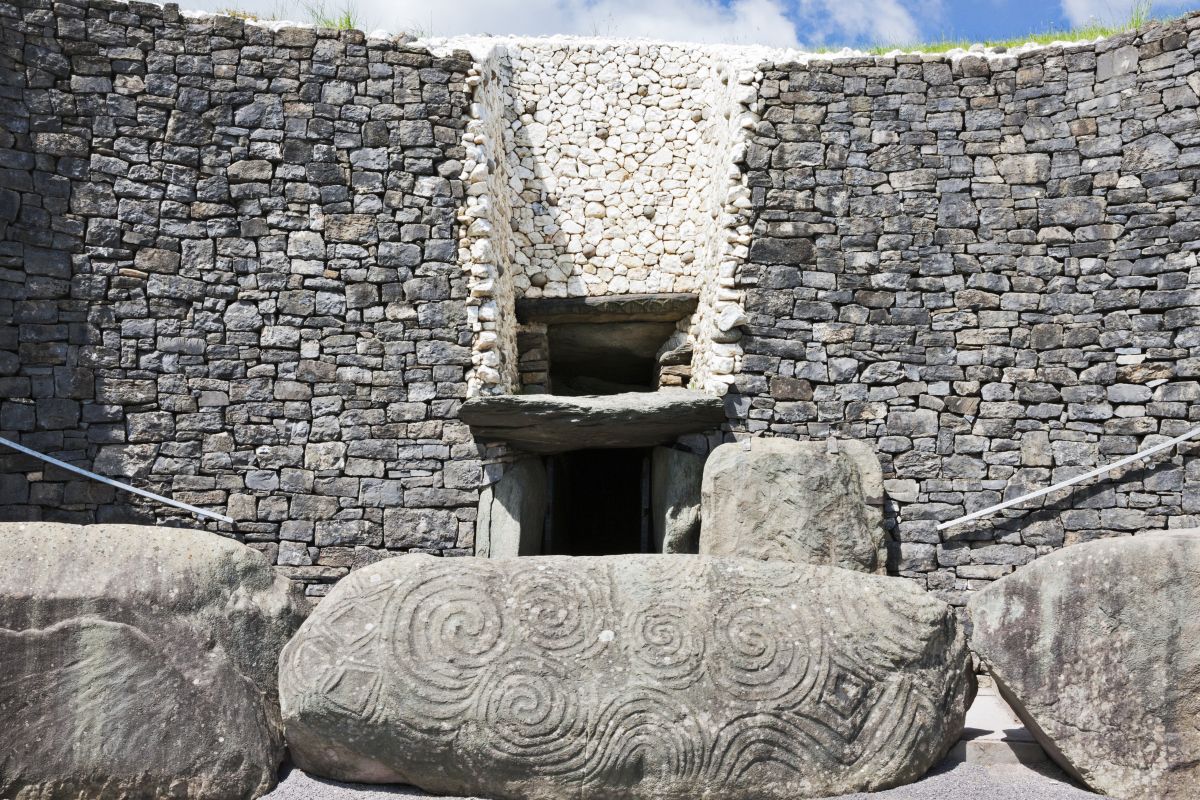
Photo by Griffin Quinn on Unsplash
-
Dlínse
Poblacht na hÉireann
-
Ainm Gaeilge
An Mhí
-
Bliana Daonáirimh
1821, 1901, 1911
-
Ceantair
118 ceantar daonáirimh
- Logainm
Annals of the Four Masters
Historical references from O'Donovan's edition (1848–51)
The Annals of the Four Masters record Meath (Irish: Meath) in 1 entry in AD 1168.
Viking & Pre-Norman
Source: Annals of the Kingdom of Ireland by the Four Masters, ed. John O'Donovan (1848–51). Public domain.
Luacháil Griffith
Cartlann Náisiúnta na hÉireann (timpeall 1830idí-1850idí)
Taifeadadh 8,629 sealbhóir i Luacháil Griffith ar fud 947 baile fearainn (1830idí-1850idí).
Príomhshloinnte
Foinse: Leabhair Oifig na Luachála, Cartlann Náisiúnta na hÉireann. Taifid phoiblí.
Gníomhartha Tapa
Faigh an Aip iOS
Cuardaigh ar an mbóthar
Teorainn an Áit
OpenStreetMapSonraí
- Béarla
- Meath
- Gaeilge
- An Mhí
- Dlínse
- Poblacht na hÉireann