46
Paróistí
1,616
Bailte Fearainn
198,886
Taifid Daonáirimh
44,630
Teaghlaigh
2
Bliana Daonáirimh
- Daoine
- 128,290
- Teaghlaigh
- 28,316
- Daoine
- 70,596 -45%
- Teaghlaigh
- 16,314 -42.4%
Maidir Liom
County Armagh is located in the northern part of the island of Ireland, situated in Northern Ireland within the province of Ulster. The county is bordered by Lough Neagh to the east, which is the largest lake in the British Isles, and shares boundaries with several neighboring counties including Tyrone, Londonderry, Down, and Louth. The landscape of Armagh is characterized by rolling hills, fertile agricultural land, and a network of rivers and waterways. The terrain is generally low-lying in the eastern portions near Lough Neagh but becomes more undulating toward the west and south, with the Armagh plateau forming the higher ground in certain areas.
The history of Armagh is deeply rooted in early Christian Ireland. The county is home to Armagh City, which was established as an ecclesiastical center by Saint Patrick in the 5th century and became one of the most important religious sites in medieval Ireland. The archdiocese of Armagh developed into a center of learning and spirituality, and the city's significance in Irish religious history remains substantial today. The county also witnessed significant events during the plantation period and subsequent centuries, as Ulster, including Armagh, experienced substantial English and Scottish settlement during the 16th and 17th centuries, which shaped its demographic and cultural character.
Armagh is notable for its strong agricultural heritage, with the county historically known for its apple orchards and fruit production, earning it the nickname "The Orchard County." The landscape's fertility made it suitable for mixed farming throughout its history. The county is also home to various historical sites and monuments, including the ancient Navan Fort, an important archaeological site associated with the ancient Ulaid people. The Cathedral Church of Saint Patrick in Armagh City remains a significant landmark in both Protestant and Catholic traditions, reflecting the complex religious history of the region.
For local communities in Armagh, the county represents a place of deep historical and cultural identity. The strong connection to Saint Patrick and early Christianity continues to influence the area's character and pride. Agriculture and rural life have traditionally formed the backbone of the local economy and community life, though like many rural areas, Armagh has experienced economic changes in recent decades. The county's identity is interwoven with broader questions of Irish history, identity, and community, making it culturally significant beyond its borders.
Source: AI generated

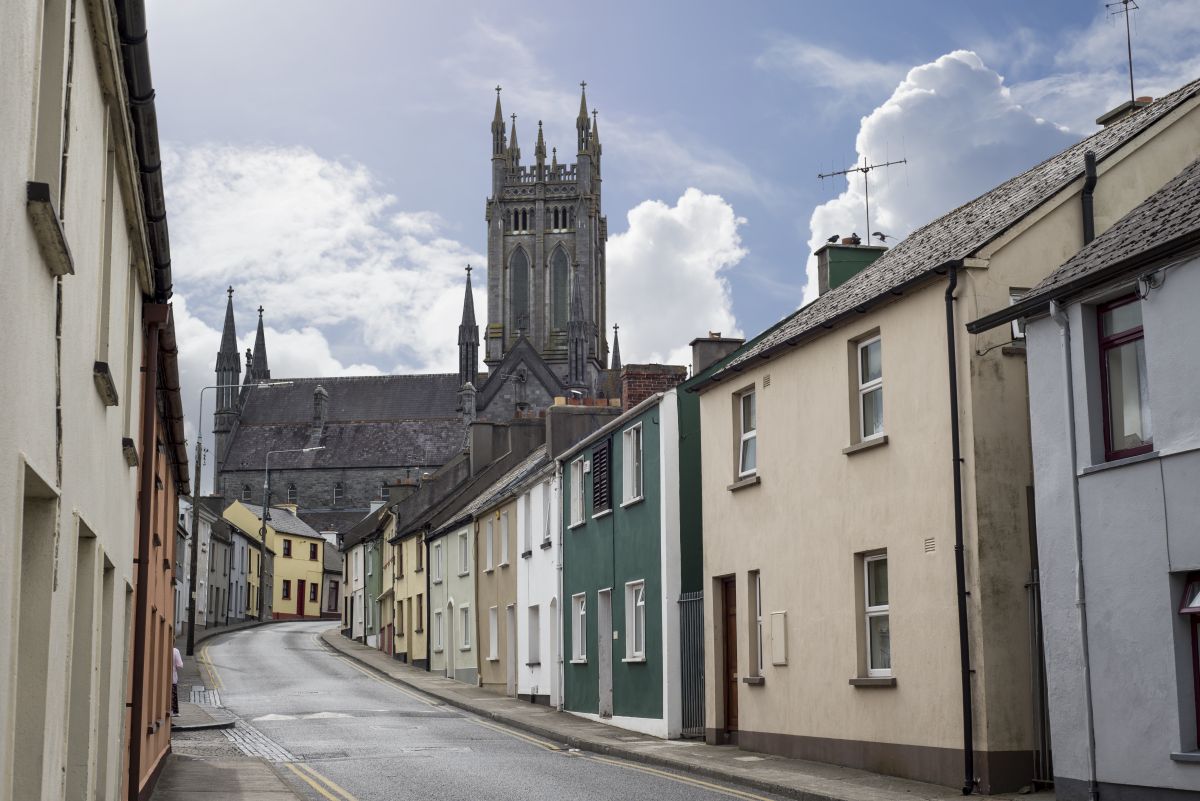
Photo by Andre Ouellet on Unsplash
-
Dlínse
Tuaisceart Éireann
-
Ainm Gaeilge
Ard Mhacha
-
Bliana Daonáirimh
1901, 1911
-
Ceantair
87 ceantar daonáirimh
- Logainm
Annals of the Four Masters
Historical references from O'Donovan's edition (1848–51)
11 places in this county are recorded in the Annals of the Four Masters.
*Corran*
The Annals of the Four Masters record Corran (Irish: Corann) in 34 entries between AD 681 and AD 4532.
The Annals of the Four Masters record Breagh (Irish: Breagh) in 3 entries between AD 861 and AD 1113.
*Drumcullen*
The Annals of the Four Masters record Drumcullen (Irish: Druim-Cuilinn) in 2 entries between AD 721 and AD 740.
Portnelligan
The Annals of the Four Masters record Portnelligan (Irish: Port-an-Fhailleccain) in 1 entry in AD 1531.
The Annals of the Four Masters record Breagh (Irish: Breagh) in 1 entry in AD 1087.
Source: Annals of the Kingdom of Ireland by the Four Masters, ed. John O'Donovan (1848–51). Public domain.
Luacháil Griffith
Cartlann Náisiúnta na hÉireann (timpeall 1830idí-1850idí)
Taifeadadh 3,705 sealbhóir i Luacháil Griffith ar fud 517 baile fearainn (1830idí-1850idí).
Príomhshloinnte
Foinse: Leabhair Oifig na Luachála, Cartlann Náisiúnta na hÉireann. Taifid phoiblí.
Gníomhartha Tapa
Faigh an Aip iOS
Cuardaigh ar an mbóthar
Teorainn an Áit
OpenStreetMapSonraí
- Béarla
- Armagh
- Gaeilge
- Ard Mhacha
- Dlínse
- Tuaisceart Éireann