146
Registres de recensement
25
Foyers
2
Années de recensement
- Personnes
- 78
- Foyers
- 13
- Personnes
- 68 -12.8%
- Foyers
- 12 -7.7%
À propos
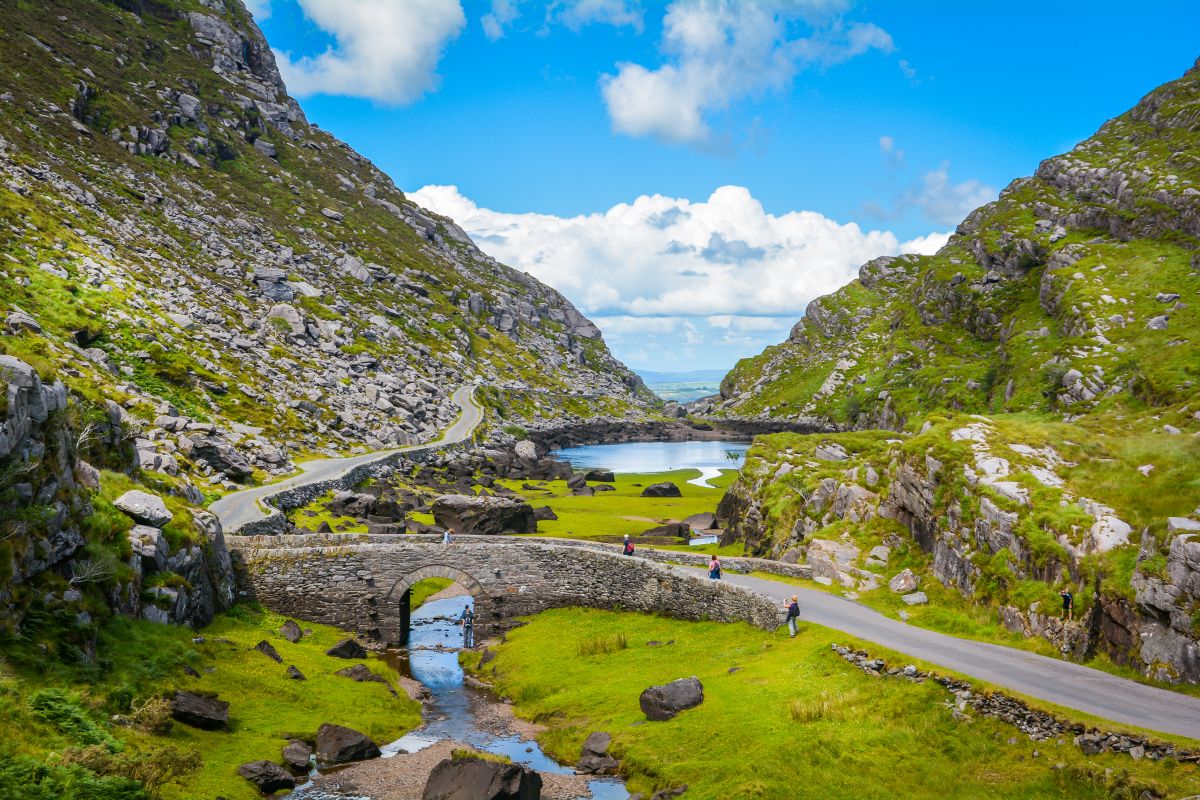
Kilmakilloge is a small townland situated in County Kerry in the southwest of Ireland, an area characterized by rugged coastal landscapes and rolling hills typical of the Munster region. The townland lies within the broader geography of the Dingle Peninsula or its vicinity, an area known for its dramatic Atlantic coastline, prehistoric and medieval sites, and traditional Irish-speaking communities. The landscape of this region is marked by moorland, stone walls, and scattered settlements that reflect centuries of habitation patterns adapted to the challenging terrain and maritime climate of southwest Ireland.
The name Kilmakilloge, like many Irish townland names, derives from Irish language roots, with "Kil" or "Cill" typically referring to a church or monastic site, suggesting the area has connections to early Christian settlement and ecclesiastical history. County Kerry has been inhabited since prehistoric times and contains abundant evidence of Bronze Age, Iron Age, and early Christian activity. The townland represents one of many small administrative divisions created during the Land Survey period, particularly relevant to the Ordnance Survey mapping that systematized Irish geography in the 19th century.
Kilmakilloge, like other Kerry townlands, would have been shaped by patterns of subsistence farming, pastoral agriculture, and fishing where proximity to the coast allowed. The community would have been tied to the broader social and economic structures of rural Ireland, including landlord-tenant relationships during the colonial period and the subsequent land reform movements. The area's history reflects the experiences common to rural Kerry communities, including periods of population change, emigration, and adaptation to modern economic shifts.
Today, Kilmakilloge remains part of the rich cultural landscape of County Kerry, contributing to the county's heritage and identity as a place of historic significance and natural beauty. While small and not widely known beyond local and genealogical circles, the townland represents the intricate patchwork of named places that comprise rural Ireland and its continuity of settlement and community life.
Source: AI generated
No photo added yet
- Paroisse
- Comté
-
Nom irlandais
Cill Mocheallóg
-
Baronnie
Glanarought
- Logainm
Valuation Office Records
From the National Archives of Ireland (c. 1830s–1850s)
26 occupiers recorded in the Valuation Office Books for this townland.
Source: Valuation Office Books, National Archives of Ireland. Public records.
Actions rapides
Obtenir l'application iOS
Recherchez en déplacement